

Moving into a new house can feel overwhelming, but small, intentional actions can quickly make it feel like home. From using familiar scents to creating cozy spaces, these seven tips can help you settle in faster:
- Light scented candles with familiar aromas like vanilla or lavender to evoke comfort and mask new-house odors.
- Hang meaningful wall art or photos to personalize your space.
- Set up your kitchen essentials, like a coffee station, to establish routines.
- Focus on your bedroom by using quality bedding for a comforting retreat.
- Add indoor plants or an herb garden to bring life and freshness to your home.
- Display personal items like gifts, photos, or souvenirs to reflect your personality.
- Build daily habits like making your bed or enjoying morning coffee in a favorite spot to create familiarity.
These steps help create a welcoming environment and foster a sense of belonging in your new space. Start with the areas you use most - like the bedroom and kitchen - and let personal touches transform your house into a home.
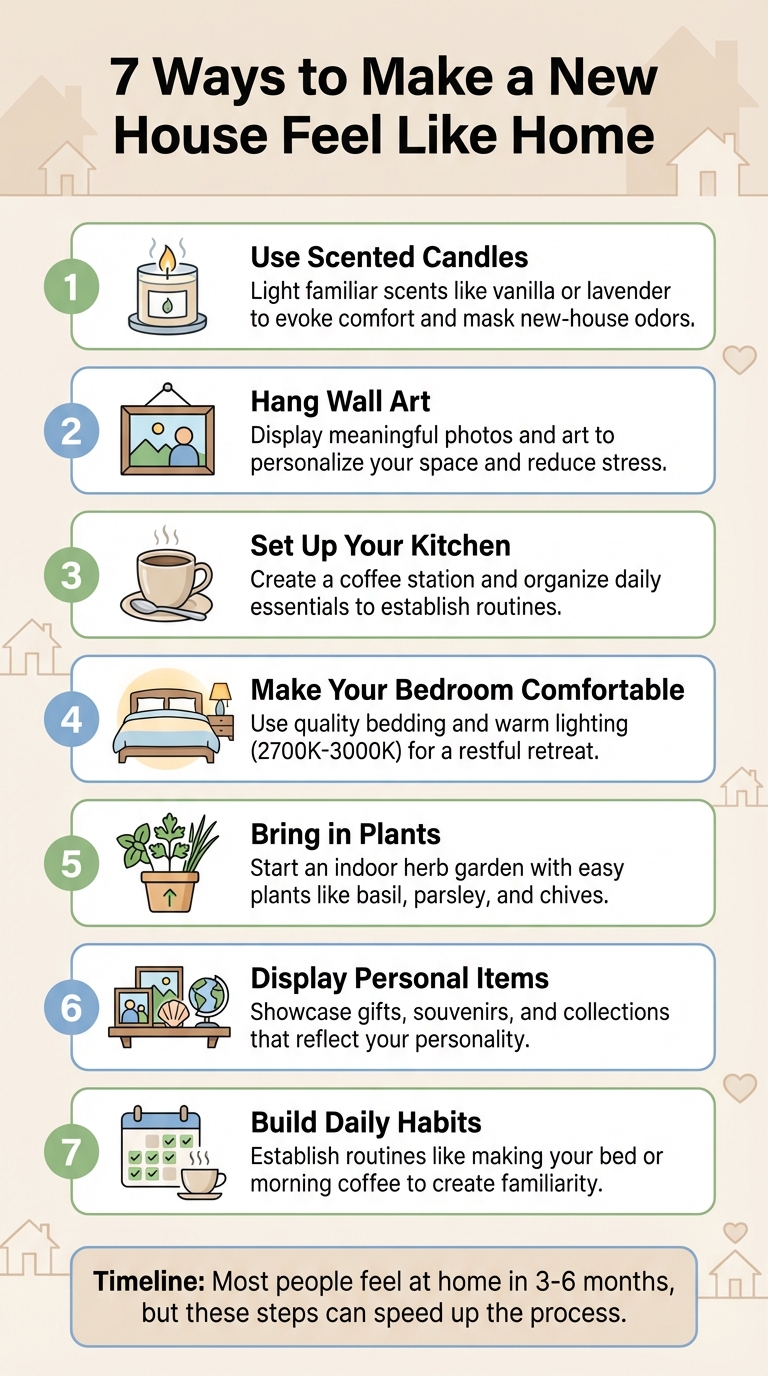
7 Steps to Make a New House Feel Like Home
10 Ways To Make Your Home More Cozy & Inviting
sbb-itb-33eeae7
1. Use Scented Candles to Create Familiar Smells
Did you know your sense of smell is deeply tied to your emotions and memories? Lighting a candle with a familiar scent can instantly evoke feelings of comfort and safety. These "sense memory links" connect your space to positive experiences, making it feel more like home.
Stick to scents or brands you’ve loved in the past. For instance, if vanilla candles were a staple in your old bedroom, bring that same warm, inviting scent into your new space. Marcus Larrea from Palm Paradise Realty emphasizes this idea:
"Smell might be the most powerful, yet overlooked, way to make a house feel like home."
Scented candles also do double duty by masking odors from fresh paint, adhesives, or sealants. Opt for calming scents like lavender or vanilla to unwind, or go seasonal with cinnamon in winter or floral notes in spring.
Start with your bedroom - it’s the perfect place to light your favorite candle and create a peaceful retreat. Beyond candles, consider layering in "living" scents, like the aroma of brewing coffee or freshly baked cookies. These everyday smells can help establish comforting routines and make your new environment feel more familiar.
2. Hang Wall Art with Positive Messages
Bare walls can feel stark and uninviting. Adding wall art is a simple way to breathe life into your space, reflecting who you are and creating a sense of comfort. Studies show that art can help reduce stress and increase feelings of happiness.
Opt for pieces that carry personal significance - family photos, your kids' artwork, or keepsakes from a memorable trip often have more emotional value than generic store-bought decor. As Laura Mueller from Moving.com puts it:
"The more you surround yourself with things that make you feel good, the more you'll capture that feeling of home".
Even something as simple as a child's finger painting can add warmth and personality, often more so than expensive professional art. These personal touches help establish a cozy and welcoming environment.
To make your new place feel like home faster, hang a few meaningful pieces right away - even before you've unpacked all the boxes. Start with your bedroom, a space where you'll likely retreat after long moving days. If you're hesitant about putting holes in the walls, try removable picture-hanging strips for a temporary solution.
When you're ready to expand, consider creating a gallery wall in a larger room. Combine art with personal photos for a mix that feels uniquely yours. Designer Jenny Dina Kirschner highlights the importance of choosing pieces that resonate with you:
"Meaningful pieces can take a different form for each person".
For a balanced look, use the rule of threes: group three smaller items with one larger statement piece. To elevate the display, add picture lights or sconces to draw attention to your favorite works while also creating warm, ambient lighting.
If you're looking for wall art with an uplifting vibe, check out the Mental Health Reminders Wall Art from Soft Landing Shop ($34.94). Featuring positive affirmations, it’s a thoughtful way to bring encouragement and warmth into your new home.
3. Set Up Your Kitchen with Coffee Mugs and Daily Essentials
When settling into a new home, prioritize making your kitchen functional right away, even if it’s not perfectly unpacked. As Allie Drinkward from Redfin wisely says, "The kitchen is the heart of the home, even if you're not a gourmet chef".
Start by creating a cozy coffee or tea station. Arrange your favorite mugs, your coffee maker, and any morning essentials in a convenient spot. This small setup can immediately bring a sense of routine and comfort.
Pack a "first night" box with the basics you’ll need: plates, bowls, cups, utensils, a pot or pan, dish soap, a sponge, and paper towels. Having these essentials on hand will save you the hassle of digging through boxes when you’re tired. Also, stock your fridge with snacks and breakfast staples to make your new space feel like home from the start.
Cooking a simple meal, like a pot of pasta, is a great way to "break in" your kitchen and make it feel like yours.
Add a personal touch by displaying items that make you smile, whether it’s vibrant glassware or a beloved coffee mug collection. For an extra boost to your mornings, consider adding something special like the Motivation Messages Coffee Mug ($28.94) or the Coffee Mugs Set of 4 ($35.94) from Soft Landing Shop to your daily routine.
Once your kitchen is set up to support your everyday life, it won’t be long before the rest of your home starts to feel just as welcoming and familiar.
4. Make Your Bedroom Comfortable with Quality Bedding
After setting up a cozy kitchen, turn your attention to your bedroom - it’s your personal sanctuary and should be the first space you fully arrange when moving in. Sarah, an interior designer at Room for Tuesday, emphasizes, "The foundation of a good night of sleep begins with a supportive, comfortable mattress". While a good mattress is essential, your bedding choices play a huge role in making your new home feel inviting. The textures and layers you choose can bring comfort and ease during this transition.
Start by making your bed on day one with sheets, pillows, and a comforter you already love. Familiar bedding can go a long way in soothing sleep anxiety and helping you settle in faster.
When choosing bedding, go for natural materials like cotton or wool to ensure warmth and comfort. Layering is key - not just for warmth but also for style. For example, pair smooth cotton sheets with a chunky knit throw for added texture. Adjust your fabrics to the season: flannel is perfect for chilly winters, while breathable cotton or linen works wonders in the summer.
Don’t overlook the importance of quality pillows and a durable duvet insert. Plush, lofty pillows made from natural down or premium alternatives can significantly improve your sleep. As Sarah points out, "Sheet sets and duvet covers change, but a quality duvet insert endures". A reliable duvet insert serves as the backbone of your bedding, allowing you to switch covers and sheets for a fresh look whenever you like.
Finally, lighting can make or break the ambiance of your bedroom. Opt for warm light bulbs in the 2700K to 3000K range to mimic the soft glow of natural evening light. When paired with layered, cozy bedding, this warm lighting helps turn your bedroom into a restful retreat - just what you need during a busy move.
5. Bring in Plants with an Indoor Herb Garden
Once you've created a cozy bedroom, it's time to add a touch of life to your new home with an indoor herb garden. Not only do living plants brighten up a space, but they also help filter toxins and add moisture to the air. Plus, caring for them can become a calming daily ritual, helping you settle into your new surroundings. This natural addition perfectly complements the sensory touches you've already introduced, making your home feel even more inviting.
Start with herbs that are easy to grow, like basil, parsley, chives, cilantro, and dill. These are fast-growing and forgiving plants, bouncing back quickly after trimming. If you have a sunny spot, herbs like thyme, rosemary, oregano, and sage thrive with minimal effort. Nicole Burke, Founder of Rooted Garden, shares some encouraging advice:
"Herbs are the perfect starter plants for new and would-be gardeners. They don't require much space, much sunlight, or even much tending."
To set your herbs up for success, place them in a south-facing window where they can soak up 4 to 6 hours of sunlight each day. Use pots with drainage holes - terra cotta is a great option because it allows the soil to breathe. Water them only when the top inch of soil feels dry, which is usually once or twice a week.
Having fresh herbs at your fingertips not only makes cooking at home more enjoyable but also fills your kitchen with delightful aromas, adding to the sense of comfort and belonging.
If you're ready to start your herb garden, the Indoor Herb Garden Starter Kit from Soft Landing Shop ($35.94) includes seeds, tools, and easy-to-follow instructions to help you grow your own little green oasis.
6. Display Gifts and Items That Motivate You
Once you've set up your sensory-friendly space and added some greenery, it's time to make your house truly feel like home by incorporating personal mementos. Gifts, photos, souvenirs, and collections that hold special meaning can transform a generic space into a reflection of your personality and values. These items act as emotional touchstones, reminding you that your space is yours - permanent and personal.
"Personal items turn a generic space into your home. They tell the story of who you are and what matters to you".
Think about what brings you joy: a framed photo from a memorable vacation, a family heirloom with a rich history, or even a quirky collection that never fails to make you smile. These treasures can be displayed on shelves, mantels, or side tables where you'll see them regularly. They serve as visual reminders of the moments and people that matter most.
When arranging your keepsakes, try using the "3-5-7 Rule" for balance - group items in odd numbers to create a visually pleasing display. Combine three-dimensional pieces like sculptures or handmade crafts with flat items like artwork to add depth and variety. The key is to choose things that genuinely make you happy and resonate with your story. These curated displays strengthen your emotional connection to your home.
If you're hesitant to drill into walls, removable picture-hanging strips are a great alternative for showcasing photos and art right away. Focus on high-traffic areas like the living room, entryway, or your nightstand - places where these items can inspire and uplift you throughout the day.
For an extra touch, consider adding decor that aligns with your values or offers daily motivation. For example, the Mental Health Reminders Wall Art from Soft Landing Shop ($34.94) is a thoughtful option. With positive affirmations in a wooden hanging design, it’s perfect for displaying in your space or gifting to a new homeowner.
7. Build Daily Habits in Your New Space
Now that your space mirrors your personality, it’s time to make it truly feel like home by establishing daily habits. Our brains thrive on routine - when you repeat certain activities in familiar spaces, your new house begins to feel comforting and familiar instead of unfamiliar or temporary.
"Your body will understand that it's not on vacation when you start to do the kind of tasks you only normally do at home, whether that's eating breakfast at the dining table every morning or enjoying a regularly scheduled... Friday night bath." - Audrey Bruno, Contributing Writer
Start small. Make your bed every morning, savor your coffee in a favorite corner, or water your herb garden at the same time each day. These simple routines create structure and help reduce the mental effort of navigating a new environment. Over time, these patterns turn your house into a place that feels instinctively yours.
Another way to bring order is by designating specific spots for everyday items like keys, mail, or bags. When these essentials have a permanent "home", you’ll save time and avoid the frustration of searching for them.
Lastly, connect your home to the world around you. Go for evening strolls in your neighborhood or make Saturday trips to a nearby bakery. These small rituals help weave your new address into the rhythm of your life.
Conclusion
Turning a new house into a home doesn’t happen overnight, but these seven steps can help create the comforting cues and routines that foster a sense of belonging. Lighting a favorite candle, dressing your bed with cozy, high-quality linens, or nurturing an indoor herb garden are small actions that signal to your mind: This is my space.
"A house needs more than just walls and a roof to feel like home. You need personal touches that make the space yours."
– Marcus Larrea, Palm Paradise Realty
These simple, intentional efforts help your new space feel less foreign and more like the sanctuary you envision. Start with the areas you use most - like the bedroom, kitchen, and living room. These spaces have the biggest impact on your daily life, and personalizing them first can ease the stress of adjusting to unfamiliar surroundings.
Most people find it takes three to six months to feel at home in a new space, but thoughtful changes can speed up that process. Surround yourself with items that make you happy and reflect your personality. After all, your home should feel like an extension of who you are.
With time, these small habits and personal touches will transform your new address into a haven. Unpacking quickly, settling into routines, and adding meaningful details can help your house become a warm, welcoming home sooner than you think.
FAQs
How can scents make a new house feel more like home?
Scents have a unique way of transforming a space, instantly making it feel more welcoming and personal. Certain smells can stir up positive emotions or cherished memories, helping you relax and feel at ease in your new surroundings. Think about lighting a candle with your favorite fragrance, using a lavender diffuser for a calming touch, or even placing fresh herbs like rosemary or basil in your kitchen to add a sense of home.
To take it a step further, consider layering different scents throughout your home. Essential oils like eucalyptus can bring a sense of calm, cedarwood adds warmth, and citrus can energize spaces like the kitchen or bathroom. Scented candles or room sprays are also quick ways to create a specific mood, whether you're hosting guests or winding down after a long day. By choosing fragrances that truly resonate with you, your space will feel cozy and uniquely yours in no time.
What are some beginner-friendly indoor plants for a new home?
Starting your indoor plant journey is a fantastic way to make your new house feel cozier and more welcoming. For a no-fuss option, check out air plants (Tillandsia). They only need the occasional misting and thrive with bright, indirect light. Another solid pick is the ZZ plant (Zamioculcas zamiifolia), which handles low light and infrequent watering like a champ. And if you're looking for something almost impossible to mess up, snake plants (Sansevieria) are a perfect choice. They can adapt to various light conditions and need very little care.
For something more decorative, consider spider plants or golden pothos. Both are easy to care for, tough as nails, and even help clean the air. Want a trendy vibe? Go for Pilea peperomioides (Chinese money plant) or Monstera deliciosa. Their eye-catching leaves bring style to any room, and they’re forgiving if you forget them once in a while. Adding any of these hardy plants will instantly brighten your space and make it feel more like home.
Why are daily habits important when settling into a new home?
Building daily routines in a new home can bring a sense of comfort and stability during a period of transition. Familiar habits make the space feel more personal and predictable, which can ease stress and help you settle in more smoothly.
These routines also play a key role in supporting your mental and physical well-being by creating a sense of normalcy and control. Whether it’s enjoying your morning coffee in a cozy spot or sticking to your usual bedtime ritual, these small, consistent actions can transform your new house into a place that truly feels like home.